
Opening a restaurant is one thing, surviving the first 30 days is another game altogether. This is the time where minor mistakes can snowball into lost customers, broken systems, and burned-out staff.
If you're wondering "What should I focus on right after opening my restaurant?", you're in the right place. In this guide, you'll get a day-by-day operations survival plan designed specifically for new restaurant owners.
From handling order chaos to setting up smooth billing, team coordination, and real-time reporting, this guide will help you run your restaurant with confidence, not guesswork.
What to Finalize 72 Hours Before Opening?
The final 72 hours before your grand opening aren't for experimenting, they're for locking things in. At this point, your restaurant should already be operational on paper, and now it's time to stress-test it in real life.

Grand Opening Timeline
Your week-by-week action plan to launch day — from vision to execution, without the overwhelm.

Here are some important things to finalize:
1) Tech Systems Setup
- Is your POS installed, tested, and connected to all printers?
- Can your team easily take orders, send them to the kitchen, and print bills?
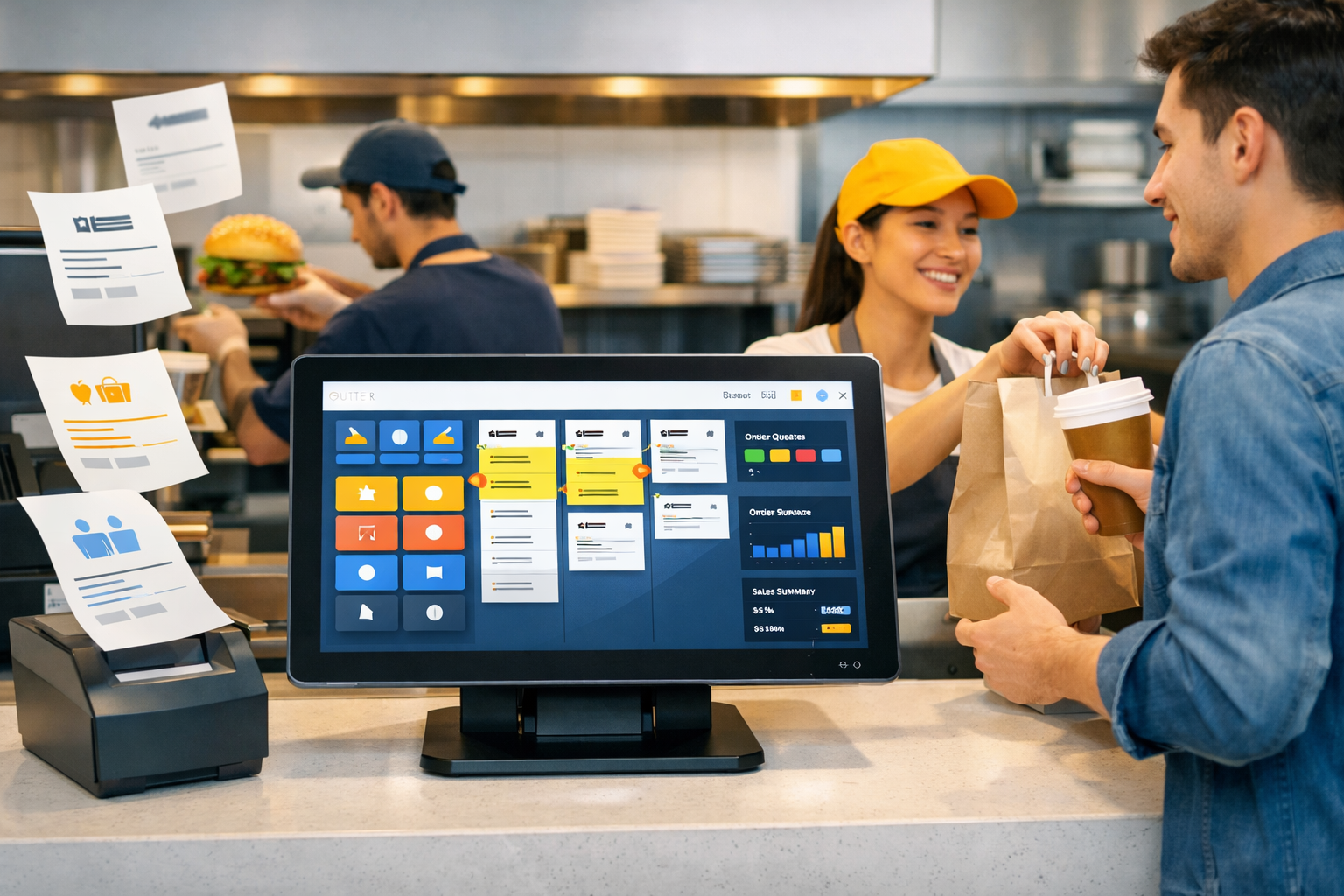
Pro Tip: Use a POS that works offline too because system crashes on Day 1 are a nightmare. (That's one reason some owners prefer hybrid models like Butter POS.)
2) Menu Simulation & Test Orders
- Run mock orders for lunch and dinner service.
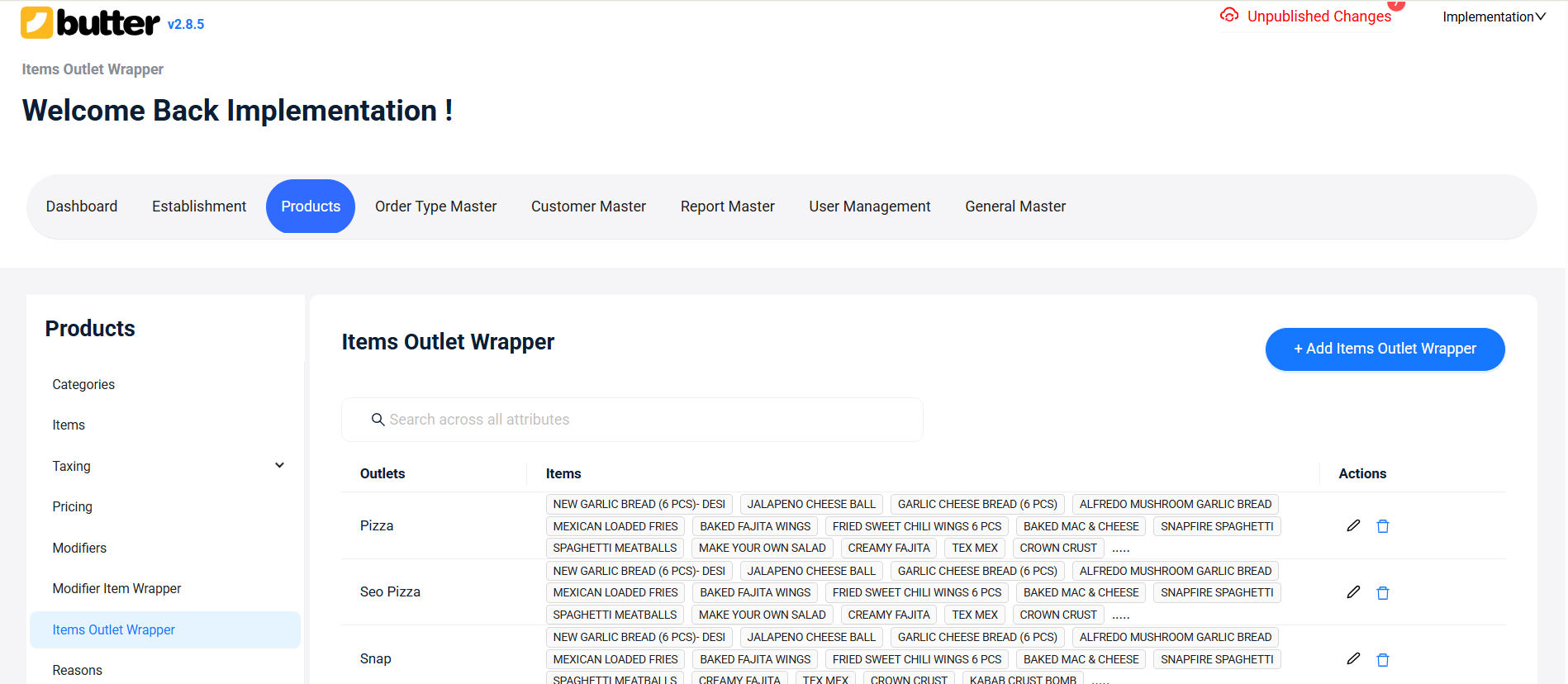
- Validate modifiers, combos, and pricing in your POS.
3) Team Readiness & Role Clarity
- Staff knows where to stand, what to say, and what to do.
- Set up daily briefing routines from now.
- Have one person lead tech, one manage tables, one watch the kitchen.
Things to Finalize Before Day 1
- POS system tested, staff trained, backup plan in place
- Menu fully loaded, test orders completed
- Team walkthrough and mock shift completed
If your POS went down on Day 1, what would your backup plan be?
Week 1 - Focus on Flow, Not Perfection
The doors are open, the staff is in uniform, and the first customers have walked in. Welcome to Week 1. This is where theory meets reality.
Things will go wrong, that's guaranteed. But your goal in these first three days isn't perfection; it's spotting the friction. Where are orders getting stuck? Are tables waiting too long? Is your team panicking at the payment counter?
Your job now is to observe, adapt, and fix fast. Below are the crucial areas you need to focus on:
➢ Track the Order Journey
- From the moment the customer orders to when the food gets on the table — watch every step.
- Are tickets reaching the kitchen instantly?
- Are items being missed or delayed?
- Can servers track what's pending?
➢ Simplify the Payment Process
- Is billing taking too long?
- Are staff struggling with bill splits or edits?
- Are you accepting the right payment methods?
➢ Decompress After Each Shift
- Hold a short 10-minute team huddle at the end of each day.
- Ask: What broke down? What worked? What confused customers?
Empowerment tip: Let one junior team member lead the debrief — it builds ownership from day one.
What gave you the most trouble in your first 3 days?
Choose one now.
The first few days aren't about winning — they're about not falling apart. If you can fix one issue per day, you're already winning.
Also Read This Guide: Common Mistakes New Restaurant Owners Make and How to Avoid Them
Now it's Time for a Systems Check
These next few days are your golden window to analyze, adjust, and fix the cracks before they become habits.
Because once your restaurant settles into a broken system, it's harder (and costlier) to reset. Now, what to evaluate now?
➢ Is Your Workflow Helping or Hurting?
- Are orders still getting delayed during peak hours?
- Do your staff know what to do when something goes wrong?
- Are dine-in and takeout processes clashing?
➢ Billing & Payments – Smooth or Stressful?
- Can staff split bills, add tips, or process refunds without calling a manager?
- Are guests waiting too long to pay?
➢ Communication Between Front and Back of House
- Are servers constantly walking to the kitchen to confirm orders?
- Do kitchen staff understand modifiers and special instructions clearly?
Quick Health Check for Your Systems
- Orders reaching kitchen instantly & clearly
- POS functioning with minimal staff confusion
- Payments processed in under 2 minutes
- Daily feedback collected from staff
- Any recurring customer complaints noted
Week 2 - Monitor, Adjust, Empower
This week is your opportunity to sharpen operations, empower your staff, and let data guide your decisions.
This is when you stop reacting and start refining. Think less about "What's happening right now?" and more about "How can we make this better every day?" Let's explore what to focus on in week 2.
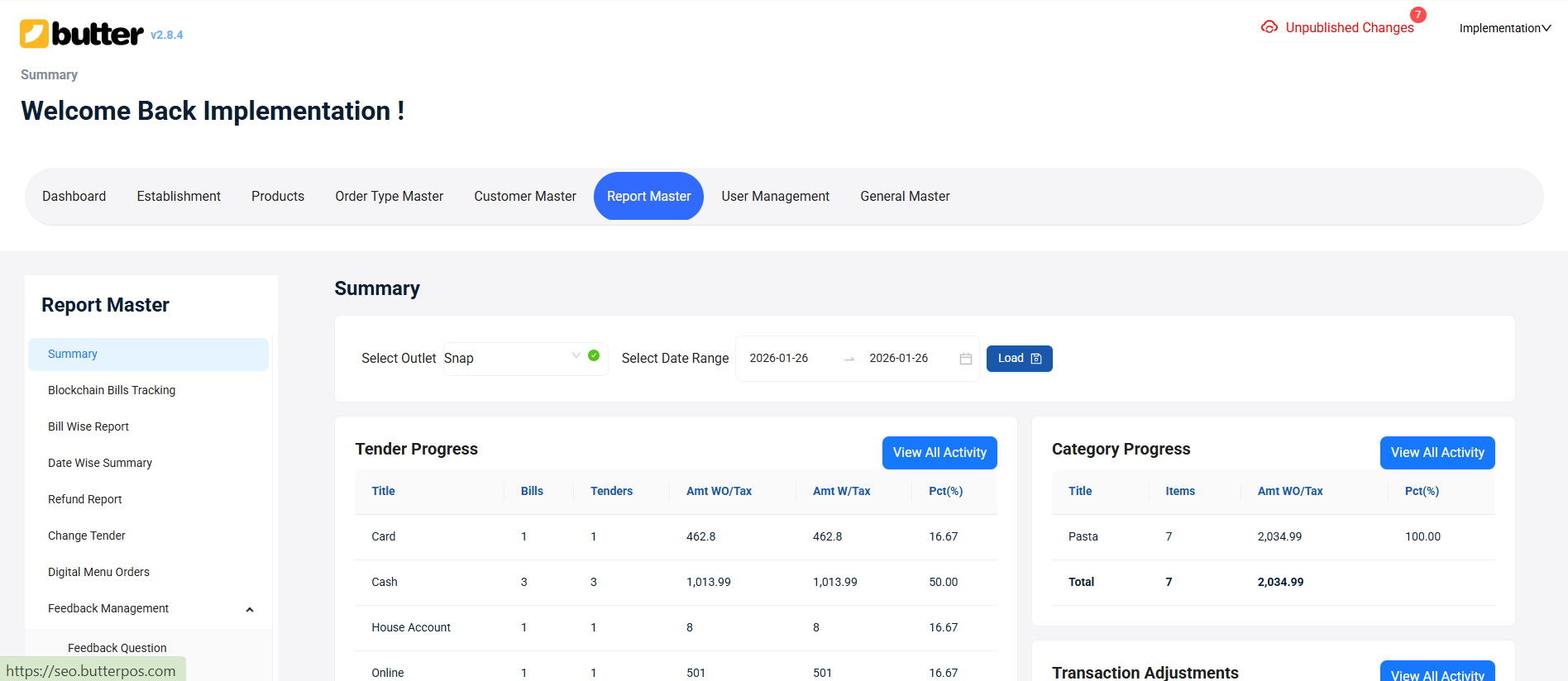
1) Review Sales Data (Even Basic Ones)
- What's your best-selling item?
- What's being ordered but not finished?
- What hours are busiest? Which ones are dead?
Smart Move: Start checking daily reports — even simple dashboards can show you which dishes to push or pause.
2) Assign Mini-Ownership Roles
- Choose a team member to handle daily cashouts, another for inventory restocking, another for customer feedback tracking.
- This builds ownership and keeps you from becoming the one-person army.
Empowerment Tip: Rotate responsibilities weekly so each staff member learns multiple skills, and you spot future leaders early.
3) Tweak Menu Based on Real Orders
- Are some dishes slowing the kitchen down?
- Are combos confusing customers?
- Is something not selling at all?
Pro Tip: Don't be afraid to adjust your menu early — the first 2 weeks are about testing what works in the real world, not just what looks good on your concept deck.
4) Check the Vibe — Not Just the Numbers
- Are staff tired or motivated?
- Do guests look confused or cared for?
- Is the energy in your restaurant healthy?
Soft Leadership Hack: Take a break from the screen, spend an hour just watching from a corner. The mood tells more than the POS sometimes.
Week 2 Performance Boosters
- Reviewed top 5 and bottom 5 selling items
- Assigned 3 ownership roles to staff
- Adjusted slow/complex menu items
- Staff check-in or informal survey conducted
- POS reports reviewed and actioned
What's one small change that made a big difference for you this week?
Week 3 - Build Consistency & Improve Guest Experience
By now, your team knows the ropes, your menu is tighter, and your systems are getting smoother. But here's the real test: are your guests coming back? The third week is all about creating consistency — not just in food, but in service, speed, and smiles. Let's see what to improve this week.
1) Consistency Across Shifts
- Do morning and evening teams deliver the same experience?
- Are portions, plating, and greetings consistent?
Pro Tip: Pick 2 or 3 "non-negotiables" (e.g. warm greeting, water within 2 minutes, clean menus) and enforce them daily — consistency builds trust.
2) Guest Feedback — Make It Easy to Give
- Add a quick feedback QR code to the receipt or table.
- Ask wait staff to personally request feedback on slow days.
3) Train for Micro-Moments
- Holding the door open. Remembering a returning guest's name. Offering to pack leftovers.
- These tiny actions leave a big emotional imprint.
Empower Staff: Give a "Guest Wow" badge every day to one staff member who made someone smile, make it fun.
4) Refine Customer Journey
- Track how long guests wait to be seated, order, eat, and pay.
- Set soft time goals for each step (e.g. greet within 60 secs, order within 10 mins).
Week 4 - Growth Mode & Repeatable Systems
If the first few weeks were about surviving, Week 4 is about scaling. You've figured out what works, fixed what doesn't, and found your groove. Now it's time to document, delegate, and automate.
The goal? Build a restaurant that delivers a great experience, even on the days you're not on the floor.
1) Document What's Working
- Finalize your best-selling menu items, top-performing staff routines, and reliable shift schedules.
- Write down SOPs (Standard Operating Procedures) for opening, closing, handling complaints, and busy rushes.
Pro Tip: Start small — even a shared Google Doc or printed checklists can do wonders for team clarity.
2) Automate Where You Can
- Use your POS to auto-generate daily sales reports.
- Set up low-stock alerts (if supported) or schedule weekly inventory checks.
- Automate customer feedback collection via SMS or receipt links.
Tech Tip: Butter POS supports automated reporting, offline mode, and smart sync with printers — perfect for owners who want to scale without micromanaging.
3) Start Building Loyalty (For Real)
- Launch a basic loyalty program — even if it's just a "buy 5, get 1 free" punch card.
- Capture guest names and numbers for future promos.
4) Delegate Daily Ops
- Choose a shift lead or manager-in-training.
- Empower them to handle basic issues: staff callouts, customer complaints, and basic tech hiccups.
Week 4 Growth Tasks
- Opening/closing SOPs documented
- Daily reports automated via POS
- Basic loyalty initiative launched
- One team member given a leadership role
- Feedback trends reviewed and acted upon
You've Launched - Now Lead.
Launching a restaurant isn't just about a ribbon-cutting ceremony or getting five-star reviews in your first week. It's about building a rhythm. A system. A team that grows with you.
From Day 1 chaos to Week 4 consistency, you've moved from doing everything yourself to designing how things get done. That's the shift that separates restaurants that burn out… from the ones that build real staying power.
If there's one lesson here, it's this 👉 Your restaurant doesn't need to be perfect — it needs to be functional, consistent, and ready to improve.
Try Butter POS Now!
Want to build a restaurant that doesn't collapse when you're not there? Start with the right systems — and yes, your POS is the heartbeat of that system.
Butter POS is designed to give growing restaurants like yours clarity, speed, and control — without needing a tech degree to use it. You focus on food, service, and vision. We'll handle the backend rhythm that keeps it all running.
Frequently Asked Questions (FAQs)
What should a new restaurant owner focus on in the first 30 days?
The first 30 days should be about building operational stability rather than chasing perfection. New owners should focus on smooth order flow, clear staff roles, accurate billing, and reliable systems. This period sets the foundation for how the restaurant will function long-term.
Why are the first 30 days critical for a restaurant's survival?
This early phase determines whether small problems get fixed or become permanent habits. Issues like slow service, confused staff, or broken workflows can quickly lead to customer complaints and financial losses. Early corrections are far easier than late-stage fixes.
What needs to be finalized 72 hours before opening a restaurant?
The final 72 hours should be dedicated to locking in systems and processes. POS setup, menu accuracy, printer connectivity, mock orders, and staff role clarity must all be confirmed. This time is meant for testing, not last-minute changes.
Why is POS testing essential before opening day?
A POS system controls ordering, billing, and kitchen communication. If it fails on opening day, operations can collapse within minutes. Testing ensures staff confidence, smooth service, and a backup plan in case of technical issues.
How do mock service runs help before opening?
Mock service runs expose real operational gaps that planning alone cannot reveal. They help identify menu confusion, missing modifiers, slow kitchen flow, and staff uncertainty. These rehearsals reduce surprises when real customers arrive.
What should restaurant owners observe during Week 1?
Week 1 should be spent observing how orders move from customers to the kitchen and back. Owners should watch for delays, miscommunication, and payment bottlenecks. The goal is understanding where friction exists, not fixing everything immediately.
Why should perfection not be the goal in Week 1?
Trying to perfect every detail early can overwhelm both owners and staff. The priority should be stability and learning. Fixing one operational issue per day is far more effective than attempting a complete overhaul.
How can restaurants simplify payments during the opening week?
Payments should be quick, clear, and stress-free for both staff and guests. Complex bill splitting or unclear workflows slow service and frustrate customers. A simple, intuitive billing setup keeps lines moving and improves guest experience.
Why are daily team debriefs important after opening?
Short daily debriefs create a feedback loop between staff and management. They help identify what went wrong, what worked, and what confused customers. This practice builds team trust and prevents repeated mistakes.
What systems should be evaluated after the first few days?
After the initial rush, owners should review order flow, kitchen communication, billing speed, and staff confidence. These systems shape daily operations and should be corrected early before inefficiencies become routine.
How does poor front-of-house and kitchen communication hurt operations?
When communication is unclear, orders get delayed or prepared incorrectly. Staff waste time confirming details, and customers experience longer wait times. Clear digital communication reduces confusion and improves service speed.
What should restaurant owners focus on in Week 2?
Week 2 is about refinement through observation and data. Owners should review basic sales trends, adjust staffing roles, and fine-tune workflows. This is when reactive management turns into intentional improvement.
Why is early sales data important even if it's limited?
Even small datasets reveal patterns in customer behavior. Early sales data highlights best-selling items, slow hours, and menu inefficiencies. These insights help owners make informed decisions instead of relying on assumptions.
How does assigning mini-ownership roles help new restaurants?
Giving staff small areas of responsibility builds accountability and confidence. It also reduces the owner's workload and creates a sense of shared ownership. Over time, this approach develops future team leaders.
Why should menus be adjusted in the first two weeks?
Real-world orders often differ from expectations. Some items may slow the kitchen or confuse guests. Early adjustments improve speed, clarity, and profitability while customer volumes are still manageable.
What role does staff morale play in early success?
High stress and unclear expectations can burn staff out quickly. Monitoring morale, rotating responsibilities, and encouraging open communication keeps the team motivated and engaged during a demanding launch period.
What is the main goal of Week 3 operations?
Week 3 focuses on consistency across shifts and service experiences. Guests should receive the same quality, speed, and friendliness regardless of time or staff. Consistency builds trust and repeat visits.
How can restaurants collect guest feedback without pressure?
Feedback should be easy and optional for guests. Simple methods like QR codes or friendly verbal requests encourage honest input. Early feedback helps fix issues before negative reviews appear publicly.
Why do micro-moments matter in guest experience?
Small actions like remembering preferences or offering help create emotional connections. These moments make guests feel valued and often influence whether they return more than the food itself.
What should restaurant owners focus on in Week 4?
Week 4 is about building repeatable systems for long-term growth. Owners should document workflows, automate reports, launch simple loyalty efforts, and delegate daily responsibilities to trusted staff.
How do documented systems help restaurants scale?
Documented processes ensure consistency even when the owner isn't present. They simplify training, reduce errors, and allow the restaurant to grow without constant micromanagement.



 Region: United States


