Choosing the right POS system can feel harder than opening a restaurant. Every supplier promises speed, smart reports, and more sales. But when you start comparing them, you realize one thing: no POS is "best" for every restaurant.
This guide looks at the most used POS systems for small restaurants in the U.S., showing where they excel and where they fall short. By the end, we highlight Butter POS, a practical choice for owners who want one system that simply works.
Watch: Best POS Systems for Small Restaurants in the US!
How We Compared These POS Systems
We evaluated each POS system based on features that matter in real restaurants:
- Ease of daily use
- Menu and order flexibility
- Online ordering support
- Inventory and reporting tools
- Hardware compatibility
- Pricing transparency
- Setup and learning time
- Support for growth
We focused on systems built for food businesses, not retail-focused POS tools that work primarily at the checkout.
Who This Guide Is For
This guide is intended for:
- Small restaurant owners
- New restaurant locations
- Restaurants switching from older POS software
- Owners who want control without paying for features they don't use
If your goal is to make serving customers easier without juggling multiple tools, this guide is for you.
Top POS Systems Reviewed
1. Toast
Toast is designed for restaurants that need strong order and kitchen management. It handles table service, online orders, and payments in one system, while also offering staff scheduling, payroll, and reporting tools.
Strengths:
- Strong kitchen workflows with order routing and display screens
- Staff scheduling, payroll, and reporting tools for daily operations
Best For:
- Full-service restaurants
- Multi-terminal kitchens
- Restaurants planning to scale
Limitations:
- Can be heavy for very small teams
- Cost increases with advanced add-ons
- Requires training for all features
Pricing:
Varies by location and plan; hardware and payment processing may incur extra costs
2. Square for Restaurants
Square simplifies operations for small teams. It handles orders, payments, and basic inventory and integrates with Square's online ordering, marketing, and payroll tools.
Strengths:
- Fast setup and reliable performance
- Mobile-friendly hardware
- Integrates online orders with POS
Best For:
- Coffee shops
- Food trucks
- Quick-service restaurants
Limitations:
- Limited advanced kitchen workflows
- Table management features are basic
Pricing:
Depends on software and hardware setup; transaction fees apply
3. Lightspeed Restaurant
Lightspeed excels at tracking inventory, menus, and sales. It helps restaurants manage stock and control food costs without being overly complex.
Strengths:
- Detailed inventory management
- Recipe tracking and performance reporting
Best For:
- Multi-menu restaurants
- Bars or kitchens with detailed inventory needs
- Owners focused on cost control
Limitations:
- Learning curve can be steep
- Interface less staff-friendly than simpler systems
- Cost increases with additional tools
Pricing:
Tiered plans; hardware and integrations cost extra
4. TouchBistro
TouchBistro is optimized for table-service restaurants, allowing servers to take orders, manage tables, and split checks efficiently. It runs on iPads and works offline.
Strengths:
- Table mapping, reservations, and menu customization
- Tablet-based for flexible service
Best For:
- Dine-in restaurants
- Complex menus
- Focused on customer service flow
Limitations:
- Add-ons required for some features
- Multi-location management limited
Pricing:
Plans vary by feature set; extra tools may cost more
5. Clover
Clover combines software and hardware in one system, managing orders, basic reports, and inventory. Additional features are available via the app store.
Strengths:
- Easy installation and setup
- Hardware bundles available
- App store for extra tools
Best For:
- Cafes and counter-service restaurants
- Single-location owners
Limitations:
- Less specialized for restaurants
- Advanced tools often require third-party apps
Pricing:
Based on hardware and plan; payments processed through Clover network
Comparison Table of Top POS Systems
|
POS System |
Best For |
Strength |
Limitation |
Ease of Use |
Scalability |
Pricing Style |
|
Toast |
Full service |
Kitchen control |
Cost growth |
Medium |
High |
Contract-based |
|
Square |
Quick service |
Fast setup |
Lacks depth |
Easy |
Medium |
Transaction-based |
|
Lightspeed |
Inventory |
Strong reporting |
Learning curve |
Medium |
High |
Tiered plans |
|
TouchBistro |
Table service |
Menu flow |
Add-ons |
Medium |
Medium |
Modular |
|
Clover |
Small teams |
Simple hardware |
Features via apps |
Easy |
Medium |
Hardware-led |
How Butter POS Supports Daily Restaurant Operations
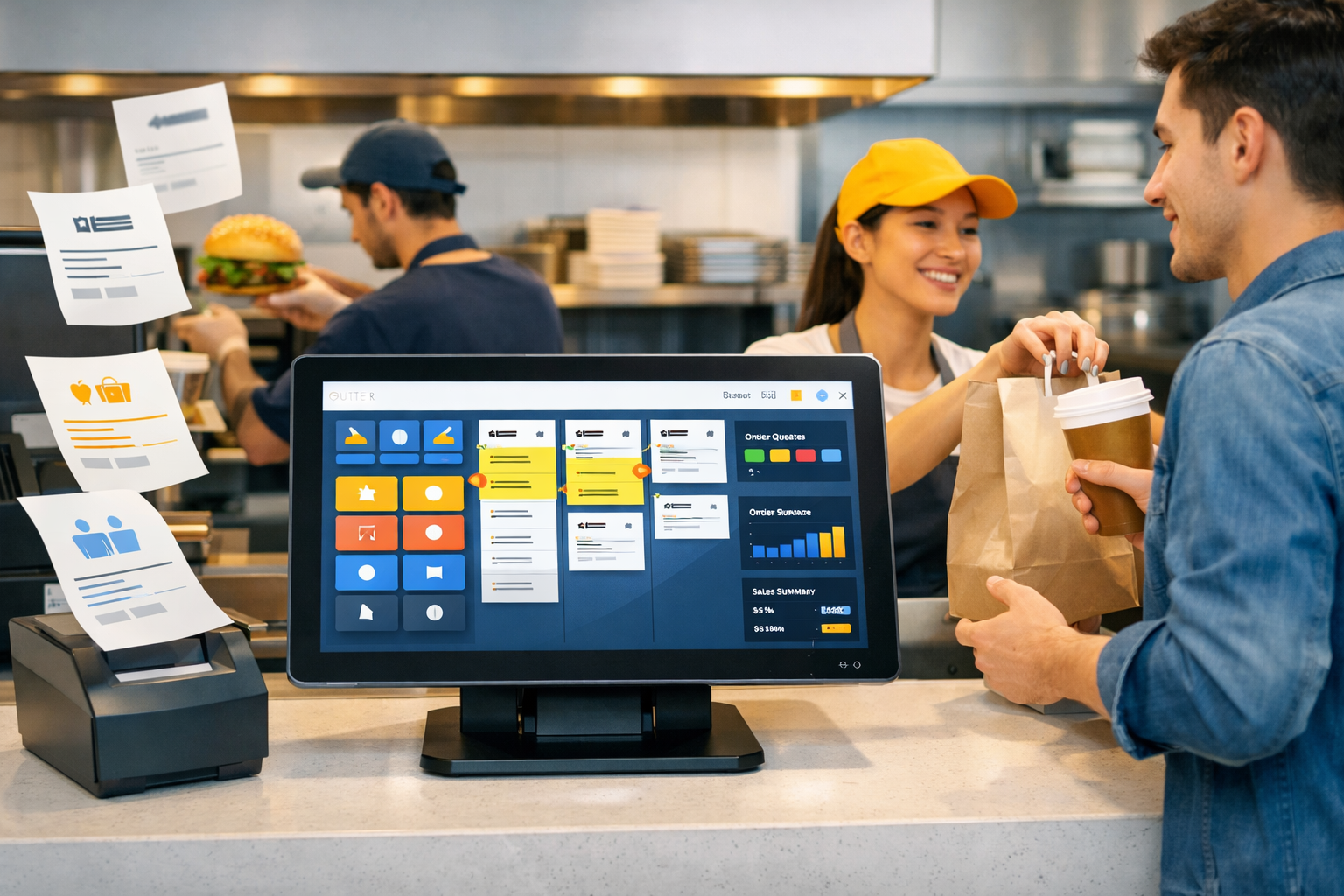
Butter POS helps small restaurants manage orders, payments, and staff from a single platform. It works across dine-in, takeout, delivery, and multi-menu kitchens, keeping operations organized without requiring multiple systems.
1. Order Management:
Orders from tables, takeout, and delivery appear in one place. Modifiers, split checks, and special pricing are supported, and online orders flow automatically into the POS.
2. Kitchen and Staff Tools:
Butter POS integrates with kitchen displays and allows role-based staff management and notifications, helping operations run smoothly during peak hours.
3. Inventory and Reporting:
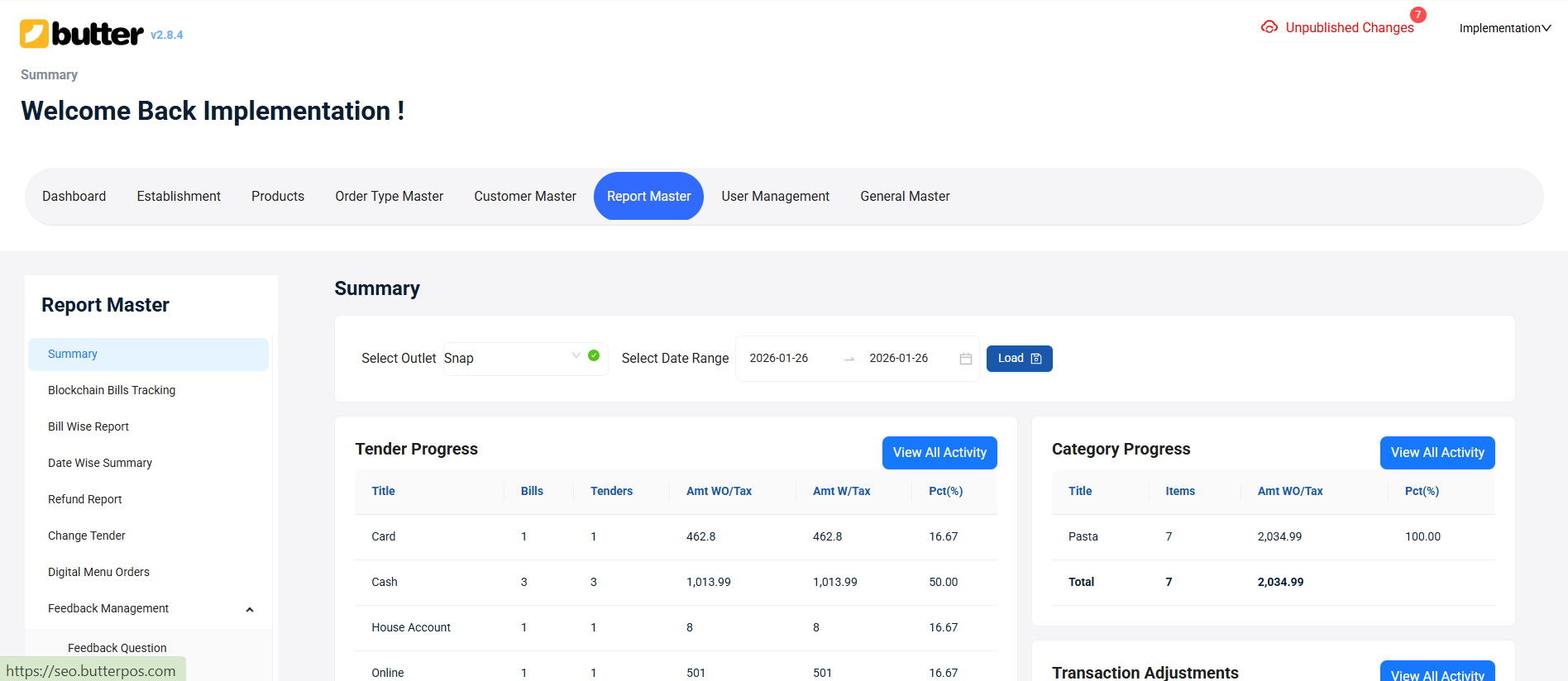
Stock levels, ingredient usage, and sales patterns are tracked automatically. Simple reports highlight top-selling items and potential shortages, making it easier to make operational decisions.
4. Payments and Flexibility:
The system accepts cards, mobile wallets, QR payments, and cash. Split payments and refunds are supported, and it works on standard tablets and supported printers.
5. Integrations and Growth:
Butter POS connects with delivery apps, accounting software, and loyalty programs. It supports single locations or multiple restaurants, letting businesses scale without switching systems.
Who Butter POS Works Best For
Butter POS works best for small restaurants that want one system to handle orders, payments, and staff management easily. It also adapts well to mobile setups and delivery-focused operations. It also works well for:
- Cafes – quick orders and simple payments
- Casual dining – flexible table management and menus
- Pizza Kitchens – mobile-friendly and easy to operate
- Delivery kitchens – manages multiple online orders efficiently
- Multi-menu restaurants – tracks inventory and combo deals
Choosing the Right POS
Choosing a POS really comes down to how your restaurant operates day to day. Some owners care most about control and advanced tools, while others just want a system that stays out of the way.
- Toast: Advanced tools and kitchen control
- Square: Simple, fast setup for small teams
- Lightspeed: Strong inventory and cost control
- TouchBistro: Smooth table-service experience
- Clover: Hardware-inclusive, basic setup
- Butter POS: One flexible system for a variety of restaurant types
Final Thoughts
Every small restaurant operates differently. Some systems focus on speed, others on control, reporting, or scale. Butter POS provides a versatile, practical solution, combining the essential tools needed to manage orders, staff, payments, and inventory—all in one system. It adapts to multiple restaurant types, helping owners streamline operations without unnecessary complexity.
Frequently Asked Questions
Is there a single POS system that works best for every restaurant?
No. There is no one-size-fits-all POS system for restaurants. Every restaurant differs in size, service model (dine-in, quick service, delivery), menu complexity, staffing, and daily workflow. A POS that works perfectly for a small café may not suit a full-service or multi-location restaurant. The "best" POS is the one that aligns closely with how your restaurant actually operates day to day.
Which POS is best for very small restaurants or cafes?
Very small restaurants and cafés benefit from POS systems that are simple, fast to set up, and easy for staff to learn. Systems like Square or Butter POS are popular because they offer straightforward ordering, basic reporting, and smooth daily operations without overwhelming features. For small teams, ease of use and speed often matter more than advanced functionality.
Are restaurant-focused POS systems better than retail POS systems?
Yes. Restaurant-focused POS systems are specifically designed to manage menus, modifiers, kitchen workflows, table service, and order timing. Retail POS systems lack features like kitchen display systems (KDS), split bills, courses, and service flow management. Using a restaurant POS helps reduce errors, improve kitchen coordination, and deliver a better guest experience.
Why do POS costs often increase over time?
Many POS systems start with low base pricing but add additional charges as your business grows. Costs can increase due to add-ons like advanced reporting, inventory modules, online ordering, third-party integrations, extra terminals, or proprietary hardware. Over time, these incremental fees can significantly increase the total cost of ownership.
Is Toast a good choice for small restaurants?
Toast is a powerful and feature-rich POS platform, but for very small restaurants, it can feel heavy. Smaller teams may not need all its advanced tools, and the pricing structure can become costly. Toast is often better suited for growing or mid-sized restaurants that can fully utilize its broader feature set.
Can Square handle full-service restaurants effectively?
Square works very well for quick-service restaurants, cafés, and food trucks. However, for full-service dining, its table management, coursing, and kitchen workflow features are more limited compared to restaurant-first POS systems. Full-service restaurants often need deeper tools for table layouts, modifiers, and service pacing.
Which POS system is best for inventory-heavy restaurants?
Restaurants with complex inventories or tight food cost controls benefit from POS systems like Lightspeed. It offers strong inventory tracking, ingredient-level management, and cost analysis. However, because of its depth, proper staff training is important to get the most value from the system.
Do all POS systems support dine-in, takeaway, and delivery?
Most modern POS systems support multiple order types, including dine-in, takeaway, and delivery. However, the quality of execution differs. Some systems treat these order types separately, while others unify them in a single workflow. Unified systems make reporting, kitchen coordination, and staff operations much smoother.
How important is ease of use when choosing a POS?
Ease of use is extremely important. A complex POS slows staff down, increases training time, and leads to more mistakes, especially during peak hours. A simple, intuitive system helps new staff onboard faster and allows experienced staff to work efficiently under pressure.
Can I switch POS systems without disrupting operations?
Yes, but it requires proper planning. Switching POS systems involves menu setup, staff training, hardware configuration, and sometimes data migration. When done in stages and during slower periods, most restaurants can transition smoothly without major operational disruption.
Does Butter POS support multiple order types in one system?
Yes. Butter POS is built to handle dine-in, takeaway, and delivery within a single unified workflow. This ensures that orders flow seamlessly to the kitchen and reports remain accurate across all service channels.
Is Butter POS suitable for multi-menu or combo-based restaurants?
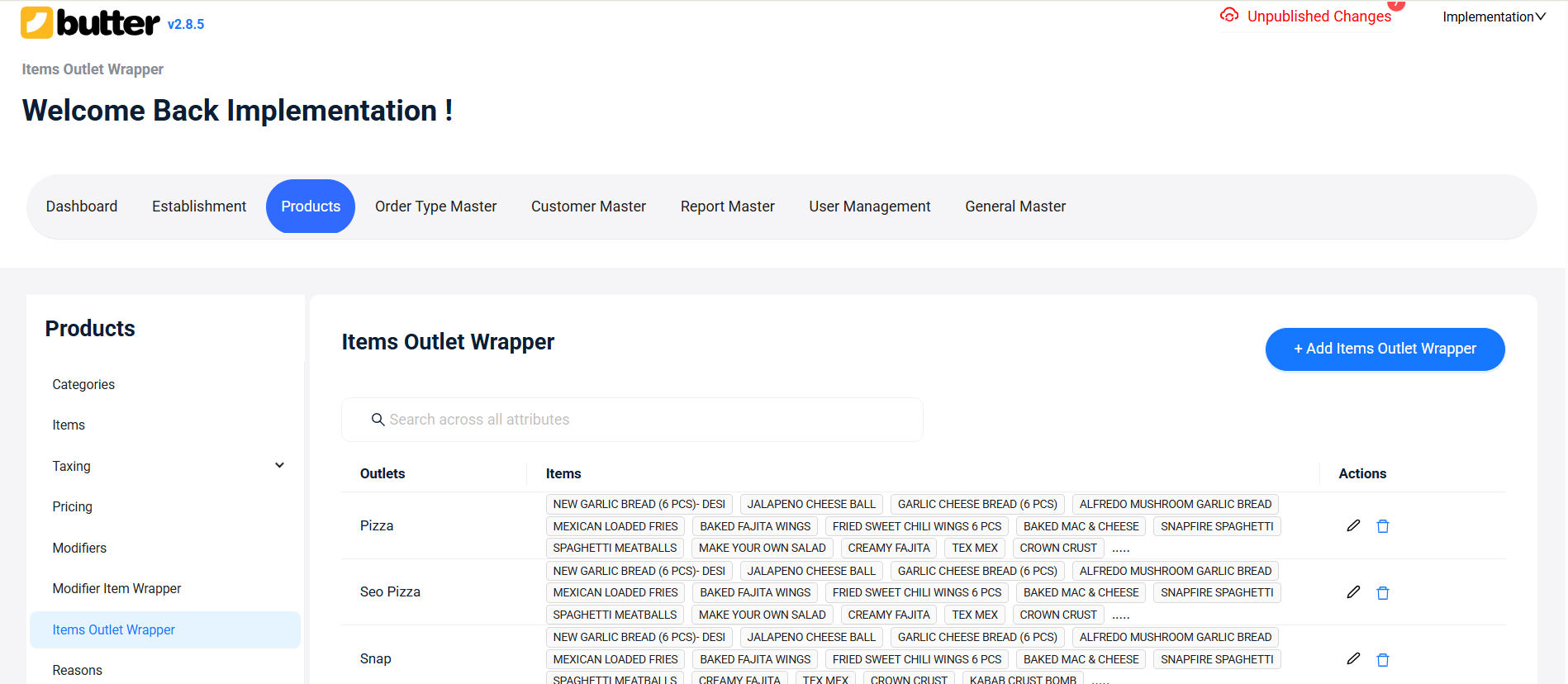
Yes. Butter POS supports multiple menus, item modifiers, combos, and meal variations. This makes it a strong fit for restaurants with complex offerings, rotating menus, or bundled deals without creating confusion for staff.
Do POS systems include hardware or is it separate?
This depends on the provider. Some POS systems bundle proprietary hardware, while others work on standard tablets, printers, and cash drawers. Systems that support flexible hardware often give restaurants more control over costs and upgrades.
How does Butter POS help during peak hours?
During busy periods, Butter POS centralizes order flow, kitchen coordination, and staff roles. This reduces miscommunication, prevents missed orders, and keeps service moving smoothly, helping restaurants maintain speed and accuracy even under pressure.
Are reports easy to understand for non-technical owners?
In Butter POS, reports are designed to be clear, visual, and actionable. Non-technical owners can easily track sales, order trends, and performance without needing advanced technical knowledge or complex setup.
Can POS systems handle online and delivery orders automatically?
Yes, most modern POS systems can handle online and delivery orders, but integration quality varies. Butter POS supports integrated online ordering and delivery workflows, reducing manual entry and minimizing order errors.
Is inventory tracking necessary for small restaurants?
Yes. Even basic inventory tracking helps small restaurants control food costs, reduce wastage, and avoid stockouts. Without tracking, losses often go unnoticed, directly affecting profitability.
What should I prioritize more: features or simplicity?
This depends on your operation, but for most restaurants, simplicity leads to better daily execution. A POS with too many unused features can slow staff down, while a simple, well-designed system improves consistency and speed.
Does Butter POS work for growing restaurants?
Yes. Butter POS is designed to support both single-location restaurants and growing operations. As a restaurant expands, the system can scale to support additional menus, staff, and locations.
What is the main advantage of Butter POS compared to others?
The main advantage of Butter POS is its balance between flexibility and simplicity. It provides restaurants with one unified system that works across different service models, without unnecessary complexity or feature overload.



 Region: United States


